
Beyond restock speed, three forces shape how much revenue a back-in-stock program produces: what the product costs, which channel carries the alert, and what shoppers do once they’re back on your site. Here’s what 8.6 million alerted requests from the last 12 months tell us about each.
1. Cheaper Waitlists Convert Harder — but Premium Still Pays
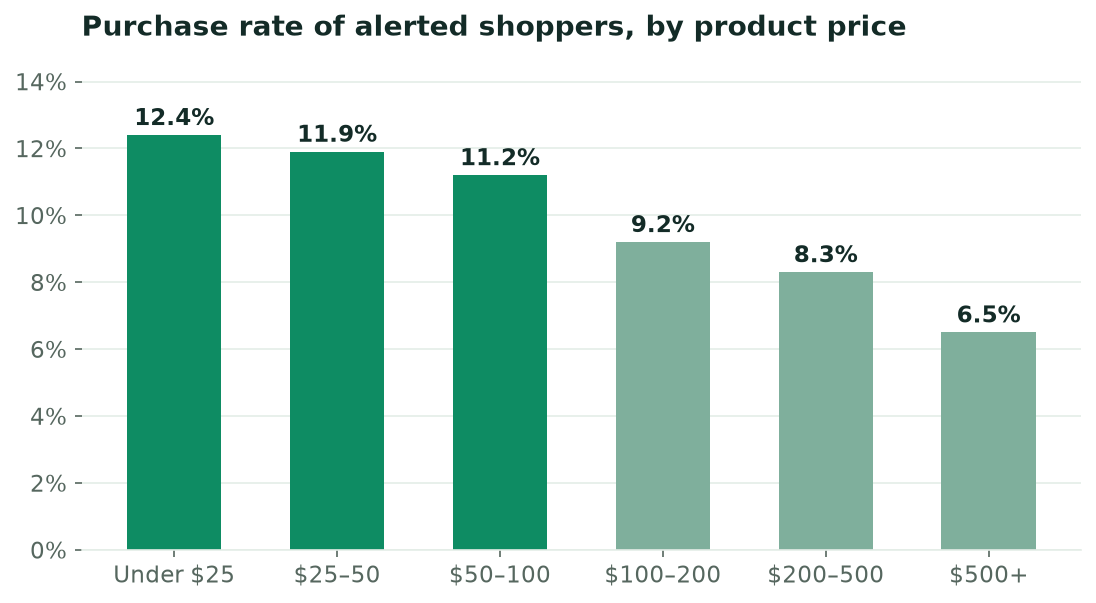
Purchase rate of alerted shoppers by product price (USD). July 2025 – March 2026 cohorts.
Insights
- Under $50: Products convert 11.9–12.4% of their alerted shoppers — impulse-friendly price points where the alert alone closes the sale.
- The mid-range: $50–100 products still convert at 11.2%, with a gradual slide through the $100–500 range (8–9%).
- Premium products: Even at $500+, one in fifteen alerted shoppers (6.5%) finishes the purchase — on items most stores assume were abandoned for a competitor.
What this means. Turn on back-in-stock alerts across your full catalog, premium items included. High-ticket waitlists are smaller and convert at lower rates, but each conversion is worth many times more, and these are exactly the sales least likely to happen without a reminder.
2. Email for Reach, SMS for Action
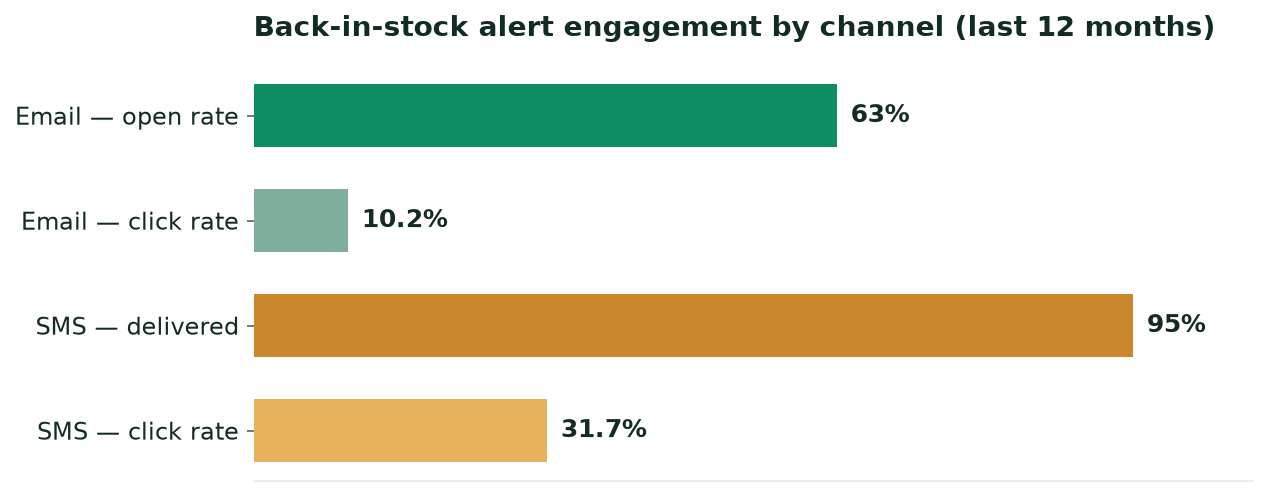
Engagement rates on 12.5M back-in-stock emails and 4.3M texts, July 2025 – June 2026. Open and click rates exclude bounced and rejected messages.
Insights
- Email: Back-in-stock emails open at 63%, roughly three to four times a typical marketing email, and 10.2% of them get clicked. This is requested mail; shoppers are waiting for it.
- SMS: 95% of texts are delivered and 31.7% of delivered texts get clicked — nearly one in three, the strongest engagement of any channel in the dataset.
- The mix today: Email rides along on 94% of alerts, SMS on 33%. Most stores haven’t switched on the higher-engagement channel yet.
What this means. Run both. Email gives you near-universal reach at almost no cost; SMS turns the alert into an interruption shoppers actually welcome. If you only capture email addresses today, adding a phone-number option to your notify-me form is the fastest engagement upgrade you can make.
3. The Basket Effect: They Buy More Than They Waited For
Insights
- Order value: The median restock order is $87, against a median alerted-item price of just $52.
- The extras: 36% of restock-order value comes from additional products added to the same cart, at an average of 1.3 units per order.
What this means. A restock alert doesn’t just recover one sale — it creates a high-intent shopping session. Make sure the product page your alert links to carries recommendations and cross-sells; more than a third of the revenue in that session is up for grabs beyond the item the shopper waited for.
The bottom line. Price the expectation, pick the channels, and dress the landing page: back-in-stock conversion isn’t a single number but a system. Stores that treat the alert as the start of a session, not the end of a transaction, consistently pull more out of every restock.